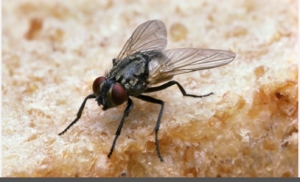
An increase in reported cases of E. coli across the UK has once again highlighted the critical importance of maintaining the delicate balance between food safety and public health. Controlling flies in food premises is essential for protecting public health. Flies such as blow flies and house flies can transmit harmful diseases like E. coli, salmonella, and campylobacter, leading to serious food poisoning outbreaks.
The Public Health Risk of Flies
Flies are notorious for spreading a wide range of human diseases. They contaminate food, damage property, and tarnish the reputation of food businesses. House flies are vectors for pathogens causing illnesses such as typhoid fever, cholera, dysentery, and various parasitic infections. These flies transmit bacteria, viruses, and parasites from their legs and mouthparts after feeding on waste materials and then landing on human food or surfaces.
How Flies Contaminate Food
Flies contaminate food by spreading bacteria and other pathogens, leading to foodborne illnesses. Their frequent movement between waste materials and food makes them effective carriers of contaminants, posing a significant threat to public health.
Food Safety Regulations in the UK
The UK enforces strict food safety regulations. It is a legal requirement to prevent pests, including flies, from accessing food premises. Ensuring effective pest control measures is mandatory. Failure to control flies in food premises, food manufacturers, or hospitality businesses can lead to:
- Loss of business reputation
- Financial losses
- Possible prosecution
Effective Fly Control Measures
Effective fly control involves a combination of hygiene practices, physical barriers, and various control methods:
- Hygiene Practices: Regular cleaning to eliminate food waste and potential breeding sites.
- Physical Barriers: Installing fly screens and nets to prevent entry.
- Electric Fly Killer Units (EFKs): Using devices to attract and kill flies.
- Chemical Controls: Applying insecticides to manage fly populations.
- Biological Controls: Introducing natural predators as part of an eco-friendly approach.
- Integrated Pest Management (IPM)
Integrated Pest Management (IPM) strategies are often employed to manage fly populations in a sustainable and effective manner. IPM combines multiple control methods to minimize the reliance on chemical treatments, promoting long-term solutions.